§ Journal · May 8, 2026
Guide Bar Gauges: .043 vs .050 vs .058 vs .063
Which gauge your saw uses, what actually changes between them, and why you don't get to pick freely.
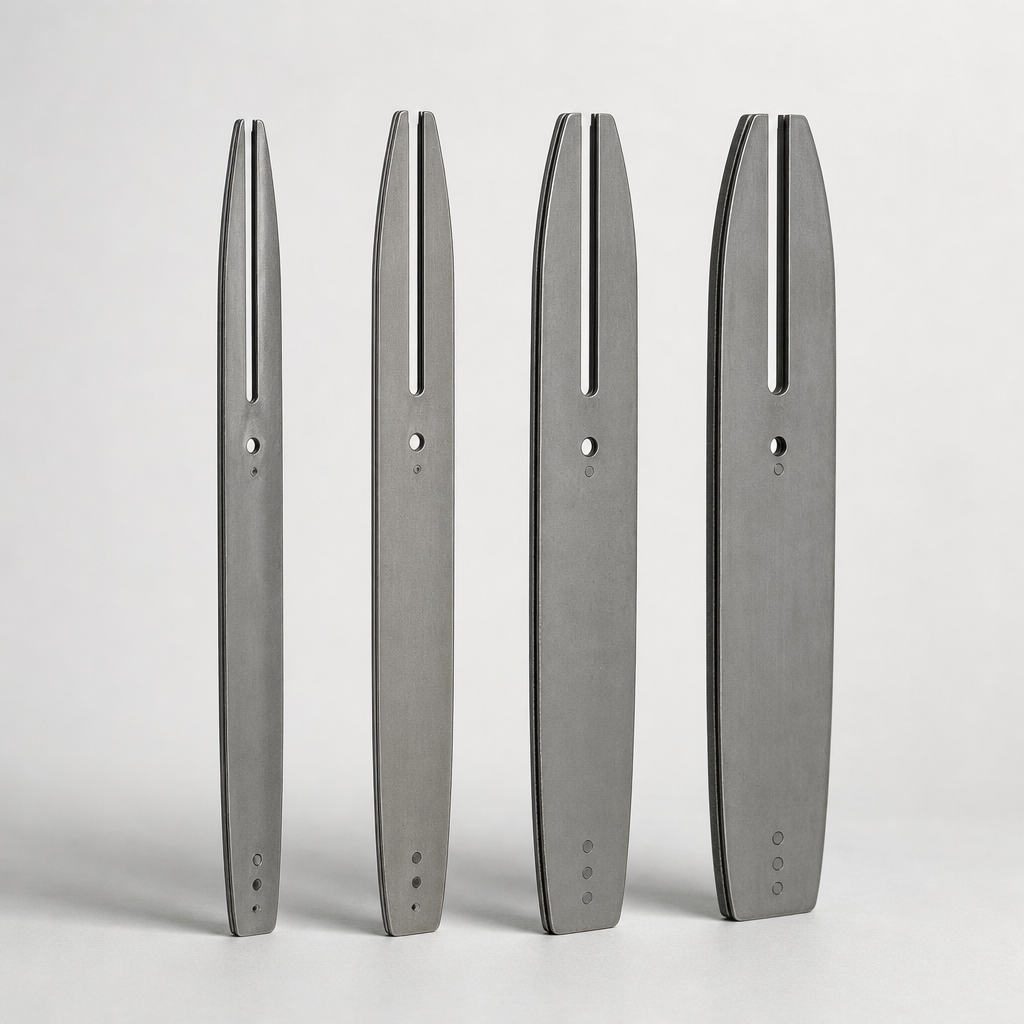
Gauge is the width of the guide-bar groove and the matching thickness of the chain’s drive links. There are four of them — .043”, .050”, .058”, and .063” — and a lot of confusion about which to buy. The short answer: you don’t choose gauge the way you choose, say, bar length. Your saw and bar dictate it, and the chain simply has to match. Here’s what each gauge is for and how to land on the right one.
.043” — the lightweight
The thinnest common gauge, found on small homeowner saws and most battery chainsaws. Thinner drive links mean a lighter bar and chain, which is easier on small or electric motors and improves runtime on battery tools. The trade-off is less robustness under heavy, sustained load — which is fine, because the saws that use .043” aren’t built for that anyway.
.050” — the default
By a wide margin the most common gauge across homeowner and mid-range gas saws. If you have no information about your saw and have to guess, .050” is the statistically safe bet to verify first. It balances strength and weight for everything from firewood to light pro work.
.058” — the middle-heavy
A step up in drive-link thickness for saws that see more load. Common on a range of mid-to-larger gas saws. Stronger drive links resist stretch and damage better than .050” under hard use.
.063” — the professional
The thickest common gauge, for professional and high-torque saws that get used hard all day. The extra material resists the stretch, heat, and abuse of felling and bucking large timber.
The rule that actually matters
Forget performance comparisons — gauge is a fit dimension. The chain gauge must equal the bar groove width:
- A .050 chain in a .058 groove flops and can derail.
- A .063 chain in a .050 groove won’t seat at all.
You can’t “upgrade” gauge without also changing the bar (and confirming the saw is built for it). So the workflow is: read the gauge stamped on your bar, then buy a chain — or a bar-and-chain combo — in that exact gauge.
How to find your gauge
It’s stamped on the bar next to the pitch — see How to Read the Stamp on Your Guide Bar. No stamp? Measure a drive link with calipers, or use a gauge tool, as covered in How to Measure a Chainsaw Guide Bar. Then shop Guide Bars and Saw Chains filtered to your gauge.
§ Parts


